Interview: Steve Gaynor
 Steve Gaynor started out as a video game enthusiast but through work and dedication started The Fullbright Company with Johnnemann Nordhagen and Karla Zimonja. In 2004 it published its first game, Gone Home. The game became a massive success with critics, but was attacked by consumers for being short and expensive. The game also created controversy for featuring a homosexual character living in 1990s Portland, Ore. In this interview, Gaynor talks about his early life, being a game designer and what defines a game.
If you had a sentence to describe Gone Home to someone who has not played it, what would that sentence be?
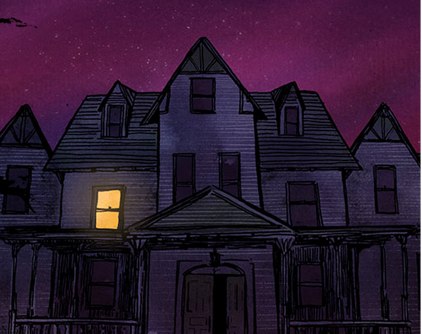
Gone Home is a game where you arrive at your house and you expect your whole family to be there, but they are not. So the whole game is about you exploring your house to trying to figure out what happened.
What made you want to become a game designer?
I really liked games a lot all through my upbringing. I grew up playing Commodore 64 and NES and Super Nintendo and PlayStation and just worked my way up. I was actually going to college for art, so I got my degree in sculpture with a minor in art history. But part way through that, I realized games were what I actually cared the most about as far as entertainment. I was just thinking about them all the time because there was just so much. I could do new things with them. Then I just went from wanting to make them to actually making them, and from then it was figuring out how to be a designer and doing what I wanted to do.
What games specifically inspired you?
When I was growing up, I played a lot of NES games like Zelda and Mario and all that kind of stuff, but then I got introduced to point and click adventure games through Maniac Mansion, which is an old LucasArts game on the NES, and I was like, “This is like an entirely different kind of game and it is awesome.” I really liked the puzzles and exploring this house and so forth, and my friend who was my next door neighbor, he was like, “I have more games like this on my dad’s computer.” And we played Space Quest and Quest for Glory and Monkey Island and stuff like that. And that kind of took me on that road. I kind of have two different sets of inspiration which are games like Maniac Mansion and Full Throttle which are great storytelling adventure games. Then games like System Shock 2 and Thief and Deus Ex and first person immersive, much more mechanically driven games, but also about exploring and finding story and talking to characters and finding out about the world that you are in, and so on. I think that both sides of those influences are pretty clear in our work. You know, just wanting to make games like those, I was most excited about, and kind of the most unique stuff that I was playing.
When did you start focusing on the level design aspect of games?
It was when I was in my junior year of college. I had made some fan levels when I was younger, when I was 13. I made a big level for Duke Nukem 3D and the cool part about that, was at that time it was not really about downloading stuff. It was just the game and it had the level editor on the disc with the game. And I was like, “Oh, you could just make a level for this out of the box.” So I had messed around with level editor in high school a bit. It was never a serious thing. But then when I got into my college career, I did some searching into how to design games and I found out you can start as a level designer and then work your way up to being a senior designer. I was like, “I had made some levels in my life.” And I started looking for free level editing software for the games I was paying at that time. The first fan levels that I made were for F.E.A.R. the first game in that series, the first person shooter with slow-mo and that stuff. And that ended up directly getting me my first design job for an expansion pack for F.E.A.R. Somebody I knew hooked me up and they were like, “We need somebody to design level for F.E.A.R. and thats what you do in your spare time so let’s give it a shot.” You know?
What was the inspiration for Gone Home?
I had been working on the Bioshock series for a few years. I really love the storytelling and exploration of that game. I really love the weapons and weapon enhancement and fighting Big Daddies but on the other hand, it was this consistent thread of people being like, “Well, I really like exploring and listening to the audio diaries, but I wish I didn’t have to fight dudes all the time just to find out about the story.” When we were starting The Fullbright Company and the three of us had all worked on Bioshock 2 together. We all kind of had that skill set, and we ended up with four people at Fullbright, but that’s still a tiny team. You can’t really say were are going to do combat and customization and complex AIs, but you can say make the immersive experience from Bioshock, and just make the experience the whole focus of the game. And so it just became, “Oh, what story do we want to tell and where does it take place?”
 What made you want to set the game in Oregon?
Well, I guess it is because we are from here. I mean my wife is from here and I moved here when I was 19. We also founded the company up here and all lived in a house together when we built that game. And it just kinda felt natural, “Well, let’s kinda set the game in a time we remember.” We were all teenagers or preteens at the time the game was set, and in a place that is familiar to us, and just kinda draws on that authenticity of that this is a place where we are experienced with and familiar with so we should set it where we are.
How do you think you deal with your fame?
The nice thing is it is really pretty low impact. I mean, you can make it have a positive impact other than a negative impact, if you are conscious of it. It is just there are way more people paying attention of what you say and what you do. You can use that as a possible influence and say, “Wow, there are a lot more people listening to me. So I can tweet about this cool small indie game or Kickstarter people will like check it out.” And you need to be conscious of that if you say something that is controversial or negative that people will actually care. You can’t say like, “Yay well that game kinda sucks.” Because people will run around and say, “The creator of Gone Home says this game sucks.” You just have to make sure you think about the fact that people will actually react to what you say, and use that to draw attention to cool stuff. And, not target people unnecessarily or people who will get upset about X,Y,Z thing that you did or said. It is rough when there is a spotlight on you for bad reasons. It is just kinda fun because in Portland, I’m kinda known for being in Portland. There is not a lot of game design in Portland. So if somebody sees someone who looks like me, it is probably me. So people will see me in a restaurant and say, “I played Gone Home and it was cool.” And that’s awesome, and you get to actually meet people in real life who have played your stuff, but I would not say that it is a huge part of my daily experience.
So you have been pretty outspoken about your political views, such as feminism, how do you deal with people who attack you on those?
There is this idea that you are coming from a place of good faith. If you make a game that is about war it can be anti-war or pro-military but you can’t make a game about war and not express some position on it. You know what I mean? The maker has the opportunity to be conscious of that and say, “I’m going to make something that intentionally expresses my point of view.” You just have to kind of learn how to filter people who actually want to engage on a level of communication, compared to someone who just wants to be rude.
Do you think it is different when people attack you for your view compared to your game?
Yeah, I don’t think I have had a lot of personal attacks. But yeah, I do think it is different when people are focusing on the game. The thing I think is interesting about the response to Gone Home is for the most part people are not usually focused on the characters or the story, or the implied political slant on it. People are mostly focus on, “It is too short,” or, “It is not a real game because you don’t shoot things in it or whatever.” Obviously something that is short but not very good is not something that you want to pay money for (laughs). But also we are in an open market. Nobody has to buy anything they don’t want to. But there are just a bunch of weird issues being tossed around. It is definitely interesting to see peoples’ reactions to different aspects of the game.
What do you say to you critics that call your game a “walking-simulator”?
Well… here’s the funny thing. They added tags to Steam, so you could add tags to games, and they get kind of upvoted, so the more people who agree with the tag the more popular it gets. So walking-simulator is still one of the top tags on Gone Home, and I click through to it, and what I found out was that the other games that are tagged with it are like DayZ and Rust. So I’m like, what actually happened is they put us in a category with the most popular games on Steam. Not really a bad thing as far a advertising goes (laughs). But I dunno. Walking-simulator is meant as a pejorative, but it is very reductive. It is such a weird thing, because you are trying to call it a thing for some reason. You are saying, “Well it has this label on it and like well, it is a game about walking around and finding stuff.” Dear Esther and Journey is too. You can walk around and float, but it is effectively walking around a desert and there is something that can be said for how much you can do with a very limited set of mechanics. Because Stanley Parable, for instance, has very few individual mechanics, as in you are not picking up objects and manipulating them, and you don’t have a map and stuff. But with the even fewer game like mechanics. Davey Weden who made that game, he can explore all the different permutations of what it means to be walking through a first person level. Because you react to the game and the game reacts to you just based on where you are and where you are looking. And I think that is pretty incredible to say, “I get these two colors and I’m going to make a painting out of it.” Compared to, “I get a thousand colors and make whatever painting I want.”
Where do you call the line? What is a game?
You know I came from art school and the big question there is: What is art? Is this thing art or is this thing art? You go around and around in circles and you get that it’s the artist’s job to say, “I just made some art.” And then for you, as the audience, to approach it on those terms and be like, “Well do I think it is good art or bad art? Does this connect with me? Does it have any meaning? Do I get it? Does it bring something new to my life or is it just kind of tedious?” I think putting things in categories generally ends up being shorthand for “I like this” or “I don’t like this.” If somebody says, “Well, that’s not art,” they are just saying, “Ahhhh, well that’s not good.” And art being a code word for “good” or game being a code word for “something that is worth paying money for,” that is not very useful. What is important is digging past that surface statement and getting down to what is and is not there. That makes you think this is or isn’t worth spending time with. Those are totally valuable questions. I can play plenty of stuff where I’m like, “This does not really engage with me” or “I don’t really connect with X/Y/Z.” It really does not matter if it is a game or not, because if it is a game and I don’t like it, then I still don’t want to play it. Well what if it is not a game, and I think it is awesome. Well, okay great. It is worth my time, and I want to tell people they should check it out. Generally, I do think there is a base level. Generally games are player driven experiences. You have to define your own version of that experience when you have it. There is this sense of play, to say I am the one inhabiting this environment and I get to decided what happens next. And that can be big scale like “I’m going to blow up that car next,” or it can be small scale like, “I’m going to see what is behind the sofa.”
How did you meet your wife?
We met online in high school so we have been together for 15 years now. But I lived in Florida and she lived in Oregon and we started talking online, and a couple of years later I moved out here. Then we did some moving around together, but it has been a long time since.
Do you mind explaining your tattoos?
Sure, yeah. So I have this raven. And that is the first tattoo I got and it is a combination of mine and my wife’s names together. So raven. This is the owl from Minerva’s Den, a project I worked really hard on. This is the state of Oregon with the heart in it, and it is kind of iconic. You see it on bumper stickers and stuff around here. I got it after being away for six years. The last one 0451 which is the first door code in System Shock, and System Shock 2, and Deus Ex and Bioshock, and Dishonored and then we put it in Gone Home because we are kind of indebted to those games. So I got it as my memento for Gone Home.
How was your childhood? Were you a class clown?
I think that I was probably one of the biggest dorks in school. When I was growing up I was bullied a lot because I was a big nerd, but I was also kinda outgoing. So I was a big nerd and not quiet about it, which is really a great way to get other kids to make fun of you in high school. I became kind of more self-aware I guess, and became friends with other kids who were kind of outcasts, but were less socially awkward about it. I feel like I kind of grew out of it, but being a social outcast in youth is a really great way to make connections with video games and drawing and writing stories. Because you don’t have friends!(laughs).
What kind of antics would you get up to in your home town?
Well, the cool thing was when I was young, my family moved to Florida when I was 10, but before that we lived in a suburb in Missouri where we were off of the highway. And our house was here, and then there was a video store, and they stocked NES games and stuff. Then in the opposite direction there was the elementary school that I went to. Behind our house there was this big woods. So my life was just my house, walking to school, playing in the woods, then walking back to the video store and renting Nintendo game and playing them with my next door neighbor. It was just kinda normal kids stuff. I don’t think I acted out a lot. Then when I went to high school I knew some friends that were in bands. Getting to go to their shows, and seeing kids who played in their parents’ garage, and it was cool but I don’t think I got up to a lot.
Related Posts


About The Author

Richy Swinford
Richy Swinford is a junior in high school who is proud of his individuality. He respects the ideas of others whether they agree with him or not, but they should know that if they do not agree with him they are wrong.