Interview: David Wagstaff
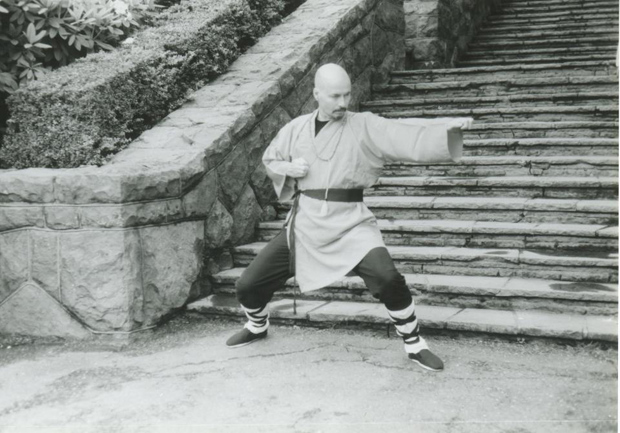
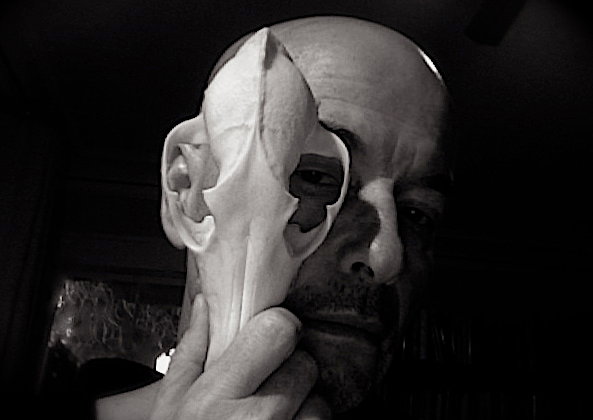
 David Wagstaff is well known around Northwest Academy, but he is far more than just the Dean of Students. Wagstaff has been an avid writer for his entire life. Be it poems, music, films or plays, Wagstaff has always been drawn to words. His work is unlike most, delving into bizarre and abstract areas. Wagstaff’s writing is many things, but it is undeniably interesting.
How long would you consider yourself being a writer for?
Six, six, six. I wrote my first song when I was six. It was an ode to chewing gum, which I sang around the house. I’m now 66 years old, I’ve been writing nonstop since that time. I’ve done screenplays, plays, poetry, a couple hundred songs, directed three terrible films and I have a major television dramatic series that’s on the market right now that we’re trying to sell. So there have only been three main things in my life: writing and art, education and various wives. And family and children. Family. Various families I should say.
What is it about writing that appeals to you so much?
The fact that it allows me to be God. To create something that is entirely in my control. Whatever happens to it afterwards, in the beginning, I’m the initiator and the creator. And that’s very attractive. Some people say it’s egocentric, but I believe it’s the ultimate expression of humility to confess that indeed, human beings are godlike.
Is there a medium that you like writing in most?
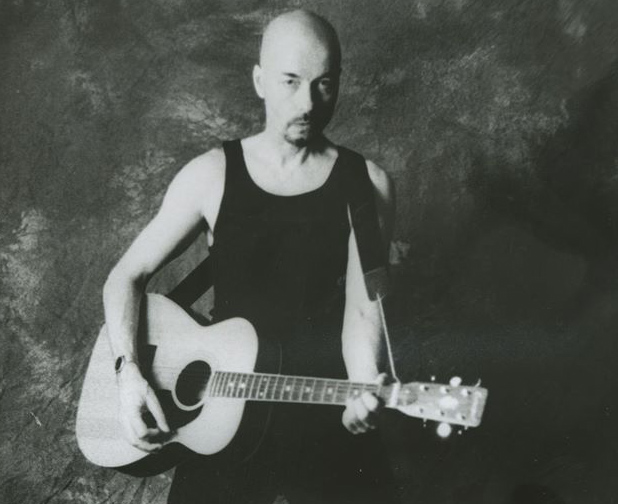
I like whatever I’m doing at the time. Right now I’m really excited about screenwriting. When I was in the music business for 20 years, I was really excited about songwriting and performing. And you know I’ve directed several of my plays, some of them here. When I’m directing a play or writing a play, then I’m most excited about that. Whatever I’m doing at the time is what I’m excited about.
Who are your favorite writers?
I have a list of people that I really love. Franz Kafka, Jorge Borges, David Lynch, Leonard Cohen. Bob Dylan is a big influence, William Faulkner and Toshiko Namioka, the Japanese dancer, Sonny Boy Williams, the harmonica player, Bo Diddley, early rock player, Lucinda Williams, country songwriter, and Captain Beefheart.
Is there something about those various artists, is it one singular thing you can pinpoint that makes you like them so much or is it a variety?
Mostly they have weird stuff, things that are out there, not common or mundane. Jorge Borges said this: “There’s two kinds of art: the mirror held up to nature and the prism in which the artist smashes the mirror completely.” It doesn’t reflect nature, but through the prism the artist creates he constructs a world of his own. So all of those writers created worlds that were self sufficient, enclosed and entirely of their creation. That’s what attracts me to an artist.
Is your writing out there, strange?
Most of it is. Some of it, like the TV series, is art of the mirror, we’re holding a mirror up to nature; it’s gotta be realistic; it’s gonna be on television. But this book of short stories that I’m completing called Pollen, is way, way out there. And some of the abstract poetry pieces that I’ve done in music performances are out there.
Have you found, with your job at Northwest Academy, is it harder to find time to write?
I never have trouble finding time to write. To me writing is like breathing, it’s like oxygen. I do it naturally. At Northwest Academy, I have been able to teach screenwriting, I founded the Project Theatre program and our music program, sound recording and I taught English which is all about writing, so it’s very much integrated and I really have to thank Mary Folberg for founding a school where arts are so important, where I could have career in education that was in such harmony with my work as an artist.
Could you tell me more about this TV show that you’re working on?
We started working on it five years ago. It started out as a feature length film script that we completed. Then we decided to make it into a TV series. It has to do with young people in the ‘60s who were in the music business and then later they met, much later in life. They parted on bad terms and when they get back together they have to work these differences out. So it’s really designed for the Baby Boomer market. Beyond that? I don’t want it to be a spoiler.
 Does it have a name?
Its called Stop the Madness.
Are you looking for channels to get it on?
Yeah. In fact we have an important meeting next week or my partner does, with a producer that could help us tremendously and could get this on the air. But of course it’s all a roll of the die and we’ll either make it big or we won’t or we’ll have nothing. It’s all or nothing.
What do you consider your best piece of writing or your most popular?
The most popular was a song I wrote in the early ‘80s called “Frisbees from Hell.” We got local radio play on it and years later when I would go back into clubs in the city where I lived, people would just see me and call out, “Frisbees from hell!” It was a funny song; it was a good song. It’s like Led Zeppelin and Captain Beefheart mixed their music together and Edgar Allan Poe wrote the lyrics. Another musical thing is “Funky Moderns Romping Through the Cosmos.” You can see that on YouTube. Have you ever seen that?
I haven’t.
Look it up. “Funky Moderns Romping Through the Cosmos,” it was with my band Animal Money in the ‘80s. But in terms of other writing, I’m really proud of the short stories I’m finishing up. In terms of craft, it’s probably one of the better things I’ve written.
Can you tell me more about Pollen?
Well it’s a book of erotic literary short stories, which is not to say that it’s pornographic. It is erotic, but it’s literary and it’s not pulp erotica. The difference between pornography and erotica is that erotica is spiritual. Pornographic is common, barnyard, barnyard filming. That’s all porn is.
What drew you to this genre, what made you decide to write these short stories?
The most recent one was written in 2015. Well one of them is yet to be finished in 2016 and I wrote the first one, the oldest one, in 1973. So they weren’t written all at once, but every once in awhile I would get around to writing a story of this type and finally I’m collecting the best and putting them under one roof.
Do you have publisher lined up for it?
I don’t. I have not published in the traditional sense. When I first got out of CalArts I had a very good agent who was going to help me, but unfortunately, I was an impatient young man and I was always hounding her to sell my stuff and make me big money so she dropped me. I have not had an agent since. So I publish short stories in different places and stuff, but I haven’t made any money in writing fiction.
Are you hopeful with your new book Pollen?
Nah. I would be surprised, cause it’s not the kind of thing that sells. So I’m gonna self publish maybe just print up a thousand copies and give it to people that I want to read it or sell it online.
 How would you say you’ve evolved as a writer or changed as a writer since when you first started.
Well I’ve always loved the unusual, the way that I’ve changed is that in those years since I was six and now at 66, I’ve just continued to improve my craft. [He takes a drink of water]. So- it’s weird, I took a drink of water, it splashed and then the splash went up my nose, it was the weirdest thing. You gotta put that in the article, that’s a good quote right there. I drank water, it splashed up my nose, what a sensation, what a sensation. But I think that I’ve just improved upon my craft and I’ve never stopped, not even for a day, I’ve written something every day since I was six.
Is there any advice that you’d tell people who aspire to write?
Give it up, man. Go be happy, get a job, raise a family. Because it’s also a form of insanity. But if you absolutely can’t help but do it, then resign yourself to a lifetime addicted to a strange joy.
Are there any stories that you have from your time as a writer?
Well, yes. Well you see that painting there? That painting is done by my good friend Frank Ramme. We were once married to sisters and we went to CalArts together. We’re no longer married to those women and we’re both in our sixties now. But when we were we lived in this place called Antelope Valley and we did the first performance of [a piece I wrote called] The Red Mustache of Pride and what it was was an orchestra that we made out of strange things: huge pipes that we hung and rung with hammers, little baby dolls with squeaky sounds on a board that we would pinch and make move and then we hooked up some plants to a feedback machine to create loops so that the plants would respond to our music and it was like this chaotic, horrible sounding music. The vocals were me reciting The Red Mustache of Pride and Frank doing a piece called Barbecue Baptismal Bath, these abstract poems. So we hired a rock band to open for us and we filled the place. Then the rock band came off, we set up this strange orchestra, we got on stage dressed in capes and bizarre clothes and we just started beating on all these things and making this weird music and reciting this stuff. By the time we were done with the piece, the hall had completely emptied, except for three weird people from CalArts and my parents sitting in the way back, against the back wall. My father in his bowtie and my mother with her purse on her lap, thinking ,“Well, that’s my son.” So that was a disaster. So Frank and I have had many disasters since. But we had four of Frank’s shows at the Angry Pigeon, when the Angry Pigeon was a gallery and not the theater it is now. So many, many, many stories. I could write a- in fact, I should do a one man show just talking about the history of what I’ve seen from six to 66. In fact that could be the title. Wyatt, you’ve helped me come up with a title: From Six to 66.
Do you ever feel compelled to make writing that appeals to the common masses more, if only to become more popular?
Yeah, I think that’s what we’ve done with this series and also I have songs that I’ve written, that I’m trying to sell now through an independent A&R agency, that are more like Lucinda Williams or more palatable for the public. But the real fun is in the weird stuff.
When you’re making writing and art, how do you come up with the weird stuff?
It just kind of flows naturally and I’ve trained myself to listen to it. In the course of a day everyone has bizarre thoughts, weird stuff floating through their mind, but they eliminate- they don’t eliminate it they ignore it in pursuit of the more mundane aspects of their lives. Well, I have done just the opposite you know, I’ve kinda kept the mundane to a minimum and I’ve really listened to my imagination and followed it. And when you do that it becomes stronger, the imagination is like the muscle of the spirit, you know and so my imagination is on steroids without drugs.
 Do you have any other projects at the moment?
[I am working on] a memoir entitled The Dean of Misunderstandings. The title, of course, stems from my current position and Northwest Academy. Content will include the story of my unlikely entrance into the field of education (I was a recalcitrant and poor student), my early years as a teacher and my tenure at Northwest Academy. Throughout, the memoir is immersed in anecdotal tales of adolescents and their “misunderstandings” along with my attempts to assist them via methods ranging from spiritual counseling, to common sense, to draconian techniques of insidious discipline. It was our retiring Head of School, Mary Folberg, who suggested I write this book. The book will be dedicated to Mary and my father, who was also an educator.
Is it mostly stories from your time as a dean, or do you talk about what it’s like to be a dean?
Mostly it’s renditions of conferences and meetings and conversations that I’ve had with students. Conversations with students who I’m counseling or who are in trouble, that’s gonna be the bulk of it. And in the introductory chapters I’m gonna talk about my own [experiences], what a terrible student I was myself, about my father who was a teacher, about how I became a teacher and why I stayed with it for 35 years and some of my own particular theories and feelings about education and how we could improve it.
Is it different writing a nonfiction book, compared to your other writing?
That’s a good question. It is because it’s a memoir, but the distinction between a biography and a memoir, especially an autobiography, is an autobiography attempts above all to be factual, biographies are factual. Whereas in a memoir the author is telling about events that really happened but the techniques of fiction writing are used. Also in writing a memoir one must realize that the memories of events are seldom absolutely factual, so it’s different in that way.
Can you give me an example of a story that might be in the book?
Yes. This is a story not from Northwest Academy but from when I was a teacher in California. I had this student who was from Mexico who did not speak English, but the California educational system at that time was just putting these people in regular classrooms. All day long in my class he would just look out the window at the birds, the ravens in the soccer field out beyond the class and when I finally talked to him through another student who spoke Spanish, his name was Ricardo I think, I said, “Why are you just looking out there?” He said, “I like to watch the ravens and the birds.” Then I said,“Well you know it’s really important that you study, you know, so that you can get an education, get a job and all that.” He said, “The job that I want, you don’t have to read. I want to be a groundskeeper, I want to mow the grass.” Stuff like this. I said, “Well you know still you gotta graduate from high school.” But I called him Birdman. He was so anxious to get out of class every day that as soon as the bell would ring, he was a middle school student, he would run across the room. One time, I had this metal railing outside my door cause it was like a portable thing, and he tried to jump over it and his foot caught and Birdman literally, in front of the whole class, flew for like 12 feet and then landed face down on the cement. Out cold. So later in the year I got to know him and he tried working in my class, we got a translator and then finally we got an ESL tutor, he got to another class, but what I arranged for Birdman to do is, we had a gardener and a groundskeeper, I introduced him to the groundskeeper and I said, “Birdman here wants to be a groundskeeper, can you help him out?” He goes, “Yeah Wagstaff, I can always use some help! Get on kid!” So he put him on his little tractor thing and he started driving him around and so he became an apprentice to the gardener at the school and he was the happiest kid after that. So then he came to my class, now he really likes me cause I got him a ride on the lawnmower and stuff like that, so he really did try hard in my class after that, but the story to me proved that you don’t teach subjects, you teach individuals. So for Birdman getting him on the moving lawnmower with the groundskeeper was part of my being a teacher and a mentor for him and it helped and I’m sure that he’s a very good groundskeeper somewhere to this very day.
Related Posts


About The Author
Wyatt Alger
Wyatt Alger is a sophomore at Northwest Academy, in his second year of iJournalism. Besides writing, Wyatt enjoys music and plays the bass in a band with his brother.