Interview: Wendy Bell
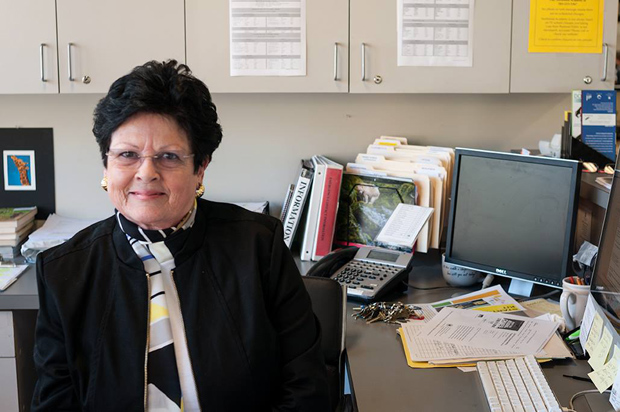 Wendy Bell, front desk receptionist, is the eyes and ears of Northwest Academy. But before settling down in Portland, Or., Bell lived in many places. From dealing with racism in her hometown of Durban, South Africa to being an au pair in Paris, France, Bell has seen it all.
So, you’re from South Africa. What was it like growing up there?
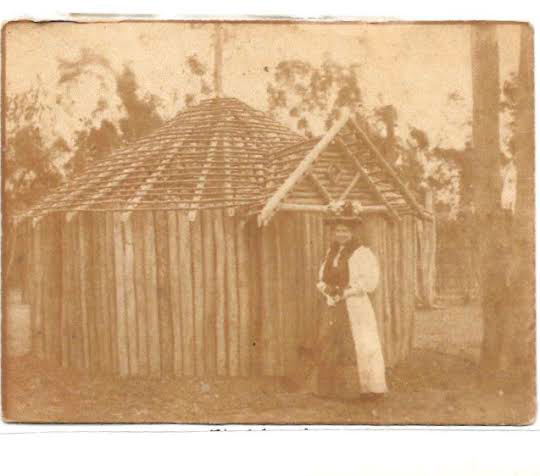
My family got to South Africa from Europe in 1860. That’s how far back my family goes, and they lived as missionaries. And then, in 1930, my family, meaning my mom and dad, and people like that, moved down to Natal, which is Durban. And I was born in Durban. I went to grade school there and I left South Africa when I was about 11 and went up to Northern Rhodesia with my family. So I spent my high school years in Rhodesia. It really wasn’t anything like high school here. It was quite different. Television didn’t come into South Africa until 1957, so I didn’t grow up with TV. I played a lot of sports in high school. There was a lot of outside activity. We didn’t have dances and things like that. Only because it was just too dangerous. You just didn’t really venture far from your home. It was a small town, and it was a mining town, and it was in the bush and it wasn’t safe. We used to ride our bikes to school, and always in a big group. We didn’t ever have freedom, like teenagers do here. Not at all.
If you didn’t grow up with TV, what did you do to entertain yourself?
We always were playing outside, depending on our age, but I always remember playing cowboys and Indians. We were involved in sports. We also played cricket, which is sort of the English version of baseball and so as kids we always had teams. We used to build tree houses in the bush, and I remember one time that I was up in the tree house with my younger brother, and my older brother was down in the bush scavenging for leaves that we were going to put on the floor, and we heard somebody else down there. He had a long machete and he was cutting the bush and he was yelling and so, my younger brother and I just stayed very quiet up on top of the tree house. We just didn’t know what we were going to do to get my brother’s attention, to let him know that he better do something about it. So, my younger brother said that he was going to go down and get him. Well of course, just at that time the man came into view and my younger brother was holding onto the tree and he just went down it like a pole. There was no skin left on his arms or his legs, but he was so scared when he hit the bottom he said he never felt anything and just ran home and I just stayed up there because, you know, I wasn’t going to get down. Those were the kinds of things we did as kids because we were in the bush, in the mining towns and we occupied ourselves.
What was the political atmosphere like?
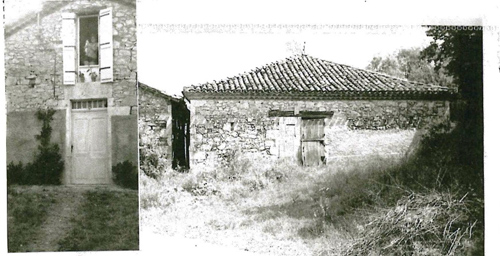
The political situation in South Africa itself is why we left because the British were pulling out. My mother decided she didn’t want us involved in the type of situation that was happening, the change over, and when we went to Rhodesia as it was still British rule. Then in the late ‘60s, when the British pulled out, and they pulled out also from the Congo, which was the border and that’s when there was a lot of trouble. And they were shooting all the white people, and they were shooting all the farmers, and they were taking over and my parents decided we’ve got to get out. So, ‘64, we got on a train in the middle of the night. We left everything behind us, everything. We went back down to Durban, where I was born, and we got on a ship and we sailed to England. From there I went to France to a finishing school. And we stayed in France for seven months. My parents renovated an old, old farmhouse. It was so old, when we were working on it, we dug out gas masks from the Second World War, and so we spent a lot of time doing that. I was going back and forth to school, and then my parents decided, once they sold that place, that Canada was the next move. So, we went onto Montreal. We landed there and we were there for about a year, and then my parents went back with my brothers and re-enrolled my brothers back in school in South Africa. I got married in Canada, and I stayed. And then I moved to California and by that time I had a child, so the three of us ended up in the United States, started our lives there.
 Did your family ever deal with violence directly?
Yes, we did. The farmers were chased out of the Congo and the families from our town were asked to help them and to give them a place to stay. We had a man stay with us who had fled from the violence and lost his wife and baby, both killed while trying to flee from their farm. My mother’s friend was shot while driving a car. I was stopped when I was on my bicycle by some black people, a couple of guys, on the way to school, and they wouldn’t let me go. They were harassing me. One time, my mother was trying to get gas for her car and these guys jumped on the hood of her car and were rocking it. They wouldn’t let her leave. Yeah, there were lots of incidences of violence. So that’s why we moved several times and that’s why we got out of Rhodesia in the middle of the night by train.
I heard that you worked as an au pair in France. What was it like?
That was a nightmare! They were identical twins, and they were about to give me the run for my money, and they did. The first time I went out, I took them to a park and they decided that one would go one way and one would go the other, and I didn’t speak French very well and I lost track of them and I panicked, an absolute panic, because we were taking undergrounds then and so I didn’t know how to get home. They did, I didn’t. So I had a maid who used to help me, so I called her and she kind of gave me directions on how to get back. I still have kept that old raggedy map. And they got home before me on their own. So that night, of course, the family had a long talk with me about what the twins were like, and that’s when I talked to my parents and said, “I can’t do this. This is awful.” So that’s when I joined them and we went to Toronto.
So do you really like working with kids?
Yes, yes I do. That was a bad experience, but yes, no working with children, it’s good.
How has living in so many different places shaped you as a person?
It’s made me stronger. It’s made me extremely appreciative of America. There is no place like the United States; there isn’t. I mean as far as our freedom and our choices. The easy access to jobs. Here, if you want to work, you can make it and you go anywhere else in the world, there’s just no work, you know? And even if you have great creative ideas and you want to make something to sell, the population is too poor to buy. So, America is very easy. That’s why when I came over here I started my own company and I’ve always worked for myself.
What company was that?
When I came over I started the cutting board business and we had a factory in California and we manufactured cutting boards for large department stores all over the United States. And they were all shapes. Shapes of animals, shapes of hearts, we called it Love and Things and we did that for seven years.
How did you get to Portland?
My son came up here and settled here and he said, “Oh, you must to visit,” so we came up here, of course in the springtime when it’s beautiful. And we said, “Well, what are we going to do if we give up the factory, what will we do?” And he said, “Well, this is what I’m going to do, I think you guys can do the same thing,” and so we said, “Coffee express.” And so, we set up our own trailer and we had it made in California, we sold everything and towed it up and put it on Highway 30 and we were there for 20 years.
You’ve been at Northwest Academy since 2004. How did you get to work here?
Mary (Folberg) came by the coffee place everyday and I really didn’t know who she was other than she was just a steady, good morning coffee person. And one day I was standing there with a glum face and I’d been in the coffee business for eight years and she said, “What’s the problem?” and I said, “I’ve got to get out of here.” She came back the next day and said, “I’d like you to come and visit the school.”
Are there any students that you’ve really bonded with and keep in touch with?
Not bonded. I see the students that have graduated, they’ll all come back and they’ll come back and say hi, and that’s really a nice feeling to see them again.
Has there ever been a case where you and a student really don’t get along and it became an issue?
No, no. Never. I think the students, at first, are a little afraid of me. They’re not sure exactly what kind of personality I am. But once kids realize that, when I say something, just listen to what I’m telling you because I don’t make up the rules I’m just asking you to follow. Once they realize that’s what I’m about, then it’s quite pleasant.
Do you hear a lot of student gossip?
No, actually, no. I think the teachers know more than I do. I think the students open up to teachers. When they’re talking around here in the commons, it’s too loud, you really don’t overhear conversations, you only hear voices. So, no, I never, never have been privy to any stuff or gossip.
What’s the biggest change that you’ve seen in Northwest Academy?
I think the new building, the Plaza Building. That’s been the biggest change and I think that it’s a change for the good. I think that the only problem with that is that people are a little more spread out now, so it’s not easy to talk to people or see teachers like we were used to, but yes I think it’s a good change. I think the kids like it.
You spend a lot of time with students, but what do you like to do with your own kids or your grandkids?
They’re so grown up. One is 19 and the other one is 15, so when they were little, we were always doing projects. Painting or things like that. I’m a project type person. You could probably say I like arts and crafts. I’m always looking for a project. And so, if they’re around me, it’s always project-oriented. I have a grandson that is a great artist, he’s a comic artist, and my brother was that way and my mother was that way and I come from that background so that’s what I like to do when I’m not here, artistic stuff.
What do you miss the most about your childhood?
There’s nothing that I miss. I miss not being able to have my childhood in the United States. The freedom that the kids have here, I think the students here grow up much faster than I did and I would’ve done it a lot differently had I lived here.
Have you been back to South Africa?
I used to go back and see my mom and dad. But my mom, my dad passed away. My mom passed away two years ago. So, I have no desire to go back, no reason. None.
 What about the other places you have lived?
No, no. I did go back to France. The southern part of France that we lived and there’s nothing there. This is my draw, all the time.
Where did you learn how to sew?
My grandmother, my dad’s mom, she sewed for a living. During the Second World War she was raising three kids and her husband was killed and that was the only way she could make a living and she made hats and she sewed all the time. And then my mother sewed, and all my mothers’ friends sewed, and they did it professionally and they just did it for themselves, and I was around it and just learned. It was like second nature to us, we had to sew. If I wanted something, I had to make it.
Besides doing things like Club Cabaret, what do you sew in your own time?
In my own time? I try not to sew for myself, because it makes me irritable. I sew for my friends, I sewed for my granddaughter when she was little and I was teaching her when she was smaller. And if there’s really something I can’t find out there, which is very seldom, then I’ll make it for myself.
What other hobbies do you have?
I paint, and I’ve done a lot of painting on ostrich eggs over the years. I made a living at that when I was raising my son. He was a baby at home and I couldn’t get out, so I painted ostrich eggs and sold them. What else do I do? I crochet. I don’t like to knit because it bugs me, but I do love to crochet. I just finished making a toy for Rachael’s baby-to-be. So I used to do all those kinds of things just to make a little pocket money. And I used to babysit babies when they were tiny and the moms had to go to work, so I had all these babies around me.
What else should I know about you?
I have a son who’s 50 and lives locally. And I have two grandchildren. And really that’s about it. Other than my travels and loving the United States. If I ever did go back anywhere I think I’d go to California because I’m a beach bum. I was raised on the beach, at the coast. We were always on wild coast and so we had the beach and the bush. I lived in California for many, many years, right on the beach and I miss it.
Related Posts


About The Author
Molly Meier
This is Molly Meier's first year in a journalism class, but hopefully the first of many as she plans to study it in college next year. Molly is an avid collegiate and NFL fan. In the future, she hopes to travel the world and experience new cultures, all while writing about her adventures.