Surviving the Great Depression
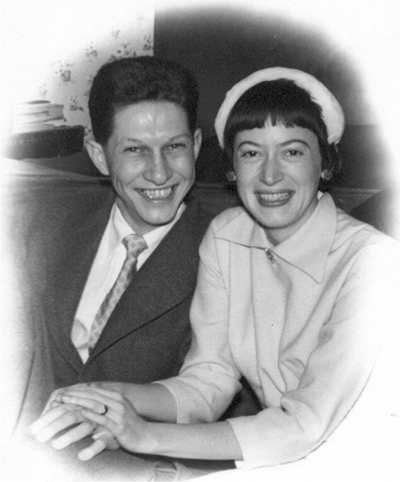 Nancy Bragdon was born into the Great Depression in Rochester, MN, but her father’s position as a physician saved her family from its effects. She remembers the ‘hobos’ that would come to her grandmother’s back door begging for some food. Even more clearly, she can remember the uneasy click of the lock after her grandmother handed the men a heaping pie tin. Paul Meyer, grew up during the Depression as well. He was born in 1925 in St. Louis, MS and remembers the homeless men just as clearly as Bragdon.
“In St. Louis, ‘hobos’ would come to our back door and typically got a reasonable meal,” Meyer said. “They had means of marking the alley gates of those homes which were generous with handouts.”
In 1929, the year of Bragdon’s birth, millions of Americans lost their jobs following the most severe economic fall in history and these door-to-door lone travelers were regular visitors. Children born during the Depression lived life abstemiously and frugally, in a very different way than most today.
Charles Le Guin was born in Macon, GA in 1927. He is a man of few words; he appears to be watchful and content, often sporting a pin with a peace sign on his jacket. A poor economy was his introduction into the world.
“As for me, living through the Depression was simply the way I grew up,” Le Guin said. “I was not particularly conscious of there being any other way.”
People appreciated and made good use of what they already had. Meyer’s father lost his job in the poultry industry to the economic recession. When his family hit a rough patch on the bumpy road of the Depression, Meyer’s parents worked hard and the family adjusted to the times. Meyer would fake his age at movies, so he could pay the cheaper kids admission, until he could not pass for 12 without suspicion. He would walk two long miles home just to save a nickel rather than ride the subway.
“There were days my mother had to feed our family of five on 70 cents a day,” Meyer said. “But I never really felt any deprivation. I learned to be prudent.”
Because families were so thrifty during the Depression, children of the time can distinctly remember when their parents splurged. Meyer remembers excitedly opening his present on his 12th birthday: the complete set of records of Tchaikovsky’s Fifth Symphony. This present was more than the young music lover could have hoped for.
“I can’t think what a real sacrifice it was for my parents to get me that gift,” Meyer said.
Meyer’s wife, Alice—born in Portland, OR in 1929—has a similar memory. She recalls her dream coming true when her parents gave her a Shirley Temple purse. Alice figures that the purse cost about $1. Like the Tchaikovsky records, this was a large sum of money for something so superfluous.
Parents toiled to shield their families from poverty; Le Guin’s family never went starving because his father worked two jobs. Alice recalls that her parents always nagged her until she finished all the food on her plate for which they had worked hard.
Phyllis Walter was born in 1933 in Hamilton, TX. She now stands barely above five feet but constantly busies herself with cooking and entertaining others, skills she learned growing up. Walter never noticed her family’s impoverishment because her mother had adapted to an ascetic and basic lifestyle.
“We did not have a lot but nobody else did so I never thought we were poor,” Walter said. “My mother sewed and made beautiful clothes for me and my dolls. I thought I had everything,”
The economic hardships of the Depression weren’t the only challenges people faced during this time as anti-Semitism and racism were rampant as well. Meyer’s father got a five-year degree in chemical engineering at Columbia College in the City of New York, but ended up working in the poultry business because he was Jewish. Meyer remembers the taunts like ‘Christ-killer’ that were casually thrown around in his childhood. Meyer attended Soldan, a predominantly Jewish school. The other neighborhood school was primarily Christian.
Meyer remembers one particular day, sauntering home from a high school football game with a friend. The silhouettes of some taller boys neared in the distance, gangly teenage delinquents looking for a fight. The older boys saw the Soldan beanie Meyer was wearing, maliciously hurling anti-Semitic threats at him like knives. However, Meyer simply kept walking, ignoring the taunts.
Bragdon is not Jewish and did not notice anti-Semitism as a child, but as an adult, she learned that the hospital her father worked at had no Jews on staff and believes that the Rochester hotels barred Jews from staying there.
“I did not know any Jews my own age,” Bragdon said. “I do not recall anyone in school and when I went to the University of Minnesota I knew there was a Jewish girls sorority. Seems unbelievable to me now.”
Bragdon also remembers the disgust that the segregation and racism of the time inspired in her. Besides one or two families that worked on the railroad, there were no African-Americans in Rochester. Besides a single hotel by the railroad for ‘Negro’ men, Bragdon was completely segregated from African-Americans. Bragdon had great respect and admiration for her aunt, a wonderful woman, who risked her job by marching in parades to end segregation.
“I saw the signs on drinking fountains ‘whites only’ and at the Southern Railway Station, there was a Whites Only and a Colored waiting room,” Bragdon said. “That I truly hated but do not recall that I had the wherewithal to voice my feelings.”
Le Guin believes that people, to the most extent, adapt to their economic and social surroundings. Those who lived during, or were born into, the Depression modified their lifestyles to fit with the economic and social changes that came with it; they still carry memories and act upon habits from the Depression.
“I learned to cook with my grandmother,” Walter said. “That was basic, all homemade and good. I think people live and adjust to the time and place of their birth. I think we all are in the process of learning both from our successes and our failures. In the Depression we lived simply and well.”
The simple lifestyle and conservation of money of the Depression is drastically different from how many Americans live today. Downright materialism was not an option for children during the Depression as it is for many young people today.
Charles’ wife, Ursula Le Guin was born in Berkeley, CA in 1929. She is sharp as a needle with almost silver hair. Watching a meal at the Le Guin’s household now might appear comical to newer generations of Americans as the couple is still affected by the scars of the Depression. A tiny scoop of lentils and perhaps some vegetables and bread on the side, a tenth the size of an average meal now. Ursula has been known to say that other’s meals could ‘feed an entire army.’ It is no surprise when Ursula remarks that she believes many Americans now cannot understand the thrifty lifestyle of the Depression.
“What I do remember is that the deep, widespread feeling so many families have now that whatever they want, they ought to have, and that whatever you can have, you can’t live without — that this simply did not exist,” Ursula said.
With World War II came change, creating jobs for the people not fighting overseas. Although the economy got better, those who grew up during the Depression often still live thriftily, as their families would have growing up.
Alice says that newer generations take very many things for granted and admits that she still sometimes sees things from the perspective of someone living in the Depression. Sometimes it even amazes her when she and her husband can spend money on luxuries for their children.
“My pediatrician reminded me that although he and I had both grown up in the Depression, we did not need to impose on our children deprivations that we now could afford,” she said.
Many children that were raised in the Depression see that later generations are focused on extraneous objects, whereas their generation was focused on making due with what they already had.
“I do confess to being judgmental if I know someone who chooses not to give to charitable causes but wears designer clothes,” Bragdon said.
It is easy to live in the past, or at least the memories and philosophy of it. As generations of Americans get more materialistic and media-centered, the difference between the generation of children born during the Depression and the newer generations grows larger.
“And I think many of them (newer generations of Americans) are deeply naive in their inability to believe that anybody lives — or ever lived — without electronics: TV, microwaves, computers, iPhones, tweeting, texting…,” Ursula said. “This cuts them off in a strange new way not only from the truly poor all over the world, but from all human history before about 1960, 1980, even before 2000. That is scary to me.”
Related Posts


About The Author

Isabel Downes-Le Guin
Isabel Downes-Le Guin is a senior in the Creative Non-Fiction class. Isabel is barely ready for college. She enjoys books and being sassy.