 At Northwest Academy, we are lucky enough to enjoy a range of creative classes in subjects such as dance or painting. But students at most public schools don’t have access to similar classes. States are constantly reducing their education budget, which leads to bigger classes, less teachers and, perhaps most importantly, the removal of arts and music programs. While these cuts in budgets may be necessary, classes such as drawing or band, essentially ones viewed as less valuable to students, are usually singled out. The fact that music and arts are targeted far more than math and science, despite their extreme value to students, is absurd.
“Of course we cut arts and music, we need science and math so our kids can get a job in the real world,” you might say. However, arts and music classes are just as likely to help you succeed. According to a study released in 2014 by Arete Music Academy, students who study art are more likely to work better in groups, excel in their classes, stay in school, and pursue further learning after high school. Another study published by the National Association for Music Education in 2006 shows an increase in graduation rate by more than 20% in schools with arts and music programs.
Studies like these make it clear how important the arts are to the development of a student. Sure, knowing how to play the guitar won’t help you get an office job, but the clear mental benefits that creative classes give students are worth an hour away from common core classes.
Despite being so important, arts programs receive significantly less funding than their scientific counterparts. The National Association of State Boards of Education says that arts and humanities receive $250 million in federal funding each year. This may seem like a lot, but compared to the $7.5 billion that the National Science Foundation, a major funder of United States colleges and universities, gets per year, it seems much less significant.
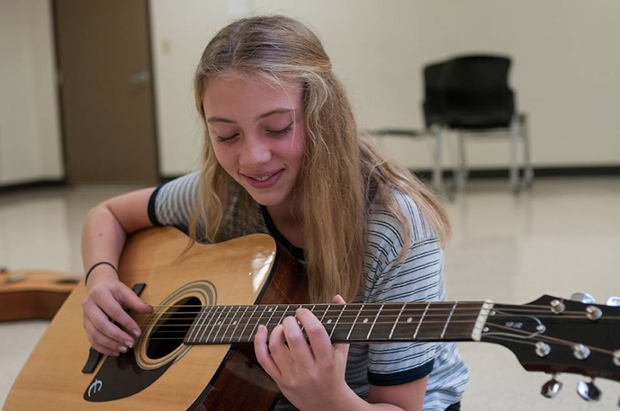
Northwest Academy students are lucky enough to have a curriculum deeply influenced by art. Classes such as guitar and painting serve as creative and artistic outlets that other schools don’t have.
“The arts develop facets of human beings that the traditional academics don’t address,” Mary Folberg, Head of School, said. “What I feel is ideal in education is the combination of arts and academics.”
This combination is key. Getting rid of academics in exchange for arts isn’t the solution. The mixture of both creates a successful school environment.
However, Northwest Academy’s program comes with a price tag that many families can’t afford. Without a sufficient scholarship some students are forced to look elsewhere for arts.
Rather than cutting art courses, schools should focus on adding more creative classes in their curriculum.
“The alternative to cutting arts classes is a new mindset in schools that arts classes are not expendable,” Scott Kerman, Associate Head of School, said. “If budgets can’t be raised to include arts classes, then schools need to look at how they spend their money in other areas to find ways to bring arts education back into their programs.”
For the time being though, that’s not the case for most schools. So what should be done? If budget cuts cannot be avoided it’s important to consider if cutting arts without a second thought can create a good school environment. However if cuts to art courses are unavoidable there are fortunately many after school programs that can give students a chance to explore artistically and creatively. Programs such as School of Rock or the Northwest Children’s Theater can provide the outlet that schools lack. Unfortunately, these too come at a cost, and for some after school programs might not be a viable option either financially or time wise.
Until arts and music cease to be constantly targeted for cuts, some students may be unable to experience creative classes, a benefit all should have. Schools should offer students a chance to express themselves in whatever way suits them best, but if arts and music classes continue to get cut, this becomes much less likely.
UPDATE: Northwest Academy’s Arts After Hours program is available to students at other schools who might not be able to find arts within their curriculum. Classes in subjects such as drawing, improv and guitar are open to any students in the metro area. The classes are affordable and serve as way to give creative classes to students who might not receive it otherwise.
About The Author

Wyatt Alger
Wyatt Alger is a sophomore at Northwest Academy, in his second year of iJournalism. Besides writing, Wyatt enjoys music and plays the bass in a band with his brother.
Opinion: Arts Classes More Than Just a Pretty Face
“Of course we cut arts and music, we need science and math so our kids can get a job in the real world,” you might say. However, arts and music classes are just as likely to help you succeed. According to a study released in 2014 by Arete Music Academy, students who study art are more likely to work better in groups, excel in their classes, stay in school, and pursue further learning after high school. Another study published by the National Association for Music Education in 2006 shows an increase in graduation rate by more than 20% in schools with arts and music programs.
Studies like these make it clear how important the arts are to the development of a student. Sure, knowing how to play the guitar won’t help you get an office job, but the clear mental benefits that creative classes give students are worth an hour away from common core classes.
Despite being so important, arts programs receive significantly less funding than their scientific counterparts. The National Association of State Boards of Education says that arts and humanities receive $250 million in federal funding each year. This may seem like a lot, but compared to the $7.5 billion that the National Science Foundation, a major funder of United States colleges and universities, gets per year, it seems much less significant.
Northwest Academy students are lucky enough to have a curriculum deeply influenced by art. Classes such as guitar and painting serve as creative and artistic outlets that other schools don’t have.
“The arts develop facets of human beings that the traditional academics don’t address,” Mary Folberg, Head of School, said. “What I feel is ideal in education is the combination of arts and academics.”
This combination is key. Getting rid of academics in exchange for arts isn’t the solution. The mixture of both creates a successful school environment.
However, Northwest Academy’s program comes with a price tag that many families can’t afford. Without a sufficient scholarship some students are forced to look elsewhere for arts.
Rather than cutting art courses, schools should focus on adding more creative classes in their curriculum.
“The alternative to cutting arts classes is a new mindset in schools that arts classes are not expendable,” Scott Kerman, Associate Head of School, said. “If budgets can’t be raised to include arts classes, then schools need to look at how they spend their money in other areas to find ways to bring arts education back into their programs.”
For the time being though, that’s not the case for most schools. So what should be done? If budget cuts cannot be avoided it’s important to consider if cutting arts without a second thought can create a good school environment. However if cuts to art courses are unavoidable there are fortunately many after school programs that can give students a chance to explore artistically and creatively. Programs such as School of Rock or the Northwest Children’s Theater can provide the outlet that schools lack. Unfortunately, these too come at a cost, and for some after school programs might not be a viable option either financially or time wise.
Until arts and music cease to be constantly targeted for cuts, some students may be unable to experience creative classes, a benefit all should have. Schools should offer students a chance to express themselves in whatever way suits them best, but if arts and music classes continue to get cut, this becomes much less likely.
UPDATE: Northwest Academy’s Arts After Hours program is available to students at other schools who might not be able to find arts within their curriculum. Classes in subjects such as drawing, improv and guitar are open to any students in the metro area. The classes are affordable and serve as way to give creative classes to students who might not receive it otherwise.
Related Posts
About The Author
Wyatt Alger
Wyatt Alger is a sophomore at Northwest Academy, in his second year of iJournalism. Besides writing, Wyatt enjoys music and plays the bass in a band with his brother.