The Horror of Being a Hollywood Film Director
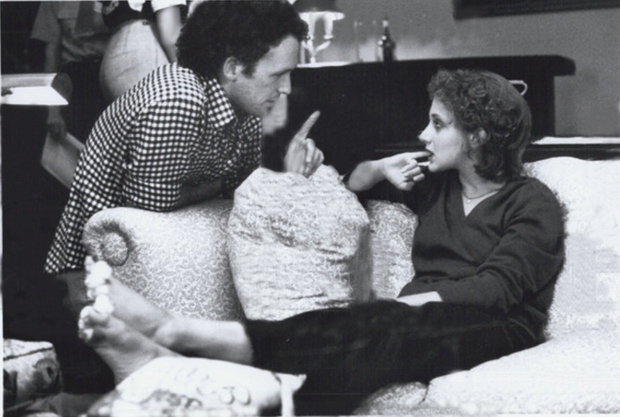 “I’m not kidding when I say for about two weeks I was like Quentin Tarantino.”
It wasn’t a joke. In 1979, film director Fred Walton had all the fame that any person working in Hollywood could ask for.
His horror film, When A Stranger Calls, had just been released. A financial success at the box office, it signaled a revitalization of the genre, alongside the likes of John Carpenter’s Halloween, released just a year before.
Walton was receiving project offers from studio executives around the clock. It seemed like his career was about to take off.
He turned them down one by one.
———————————————————————————————————————
Fred Walton does not try to flaunt his Hollywood past. He lives in Portland and is married with two children, a son and daughter. He also has two grandchildren. Walton loves cooking and shares a passion for burgers with his son, Tom. He likes fart jokes, and he enjoys dumb comedies, especially ones with Melissa McCarthy.
Apart from that, he does not watch movies, not even his own, and it is a rare occasion that he ever even talks about his career.
Every year when the Academy Award screeners arrive at his house, he does not watch them. Instead, it is his wife, Bibi, who does the Oscar voting.
His relationship with movies is amiable but distant. When Walton watches films, he notices the camera angles, the specifics of a good performance or an effective moment, but he is not enraptured by them the way he once was.
Walton knew that moving to Portland with his family would effectively end his career, but it was the decision he made, and he has stuck with it.
———————————————————————————————————————
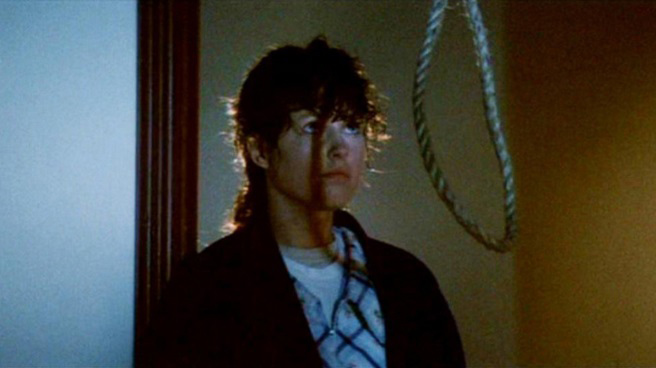 Finding success in Hollywood is notoriously difficult. Numerous actors and directors move to L.A. every year to make it big and only a select few ever truly become successful in the business.
Being a film director was not always a dream of Walton’s, and his interest in movies did not start until he was in his late teens.
“I went to this prep-school for six years and it was very white and very upper to middle class, and towards the end of my junior year, I reconnected with my best friend from grade school,” Walton said. “His friend was really into movies and I had just been an average sort-of moviegoer. At that point a movie had just been some place where you went on dates.”
Where Walton lived in D.C., there were a lot of theaters that showed international cinema and that was where he developed his love for films. He quickly became obsessed with movies, and ran the student film-viewing program at Denison University, a job he got from an older classmate, Steve Feke. Feke ended up being Walton’s principal producer on almost all his films.
The college also gave him his first film project, an orientation video to show to incoming freshmen. Instead of making a video about the school, Walton made a short film about an idealistic kid who goes to the college, only to be swept into the hedonistic world of drugs and alcohol in the ‘60s. Walton ran the project over budget by $300.
The film was never used for the freshmen, but the art teachers loved it.
From the start, Walton’s directorial style was different. His films, which include April Fool’s Day, The Rosary Murders and When A Stranger Calls, are dark, often suspenseful and encapsulated in dread. At the same time they were pensive and sometimes slow. His films can be disquieting, with long takes of silence meant to amp up the dread for the ultimately shocking conclusion.
“Most of the scary movies that were made, like 98 percent of them involved gore and violence,” Walton said. “What I was proudest of in [When A Stranger Calls] was that we managed to get across all the scares with almost no onscreen violence, playing on viewer’s dread and imagination, which is much more powerful.”
Walton could be characterized as an actor’s director. He deliberately stayed out of his performers’ way and since Walton had a very clear idea of what he was going for, the actors, whether they completely understood his approach or not, were willing to follow his direction.
Working well with actors was a skill Walton learned the hard way, when his lead actress from When A Stranger Calls, Carol Kane, turned out to be quite difficult.
“At one point, we happened to shoot the first act… I went up to Carol because she was [complaining] about one thing or another and I said ‘can I help you with anything?’” Walton said.
She insisted that nothing was wrong, explaining that in order to act upset, she had to be upset.
Walton decided to let her do her thing. Another time, before filming one particularly emotional scene in the movie, Kane was, per usual, getting noticeably upset. Stephen Anderson, the actor that was playing her husband went up to Walton.
“He said,‘Fred, uh, you better talk to Carol, she’s getting really upset and I just looked at him and said, ‘Good.’”
————————————————————————————————————–
At the height of Walton’s career, he was frequently away from home due to his constant work.
“When my father was working on a movie he would be gone for long stretches at a time and that was normal to me,” Tom Walton, his son, said. “And while he was home he was writing non-stop.”
Occasionally, the family had to move in order to be closer to Walton, once to Detroit, and another time to Victoria Island. Tom and his sister, Emily, had a childhood surrounded by the film industry. They were going to school with Danny DeVito’s daughter, Donald and Kiefer Sutherland would occasionally come over to their house for dinner, and actor Chris Pine was Tom’s childhood friend. For them, it was so common to see “famous” people around that it became commonplace.
However, apart from the obvious interaction that the Walton family had with the business, they were socially, relatively apart from it. They were, apart from Walton’s work, barely involved in it at all.
“[My dad] was very tight-lipped about his work and always dissuaded my sister and me from pursuing any career in the film industry, remarking on how difficult a life it is to be an actor,” Tom said. “It wasn’t until I actual did begin to act that I realized he was quite successful as a working director.”
Walton’s wife, Bibi, had also been an actress, playing supporting roles on popular shows like The M.O.D. Squad, but it was partly on her insistence that they finally moved to Oregon, to make him be more present with the family. It was also partially because of Walton, because as a working director, he was constantly on projects, but they were not always projects he wanted to be working on.
——————————————————————————————————
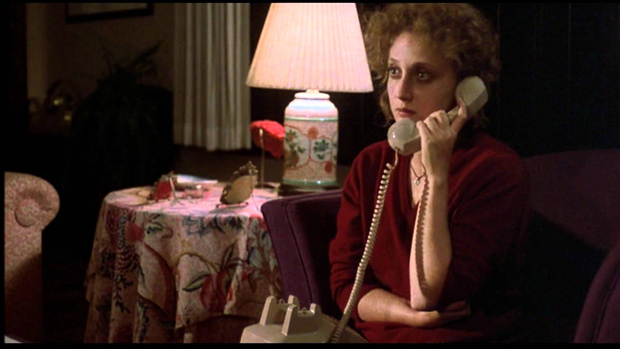 So why did a young director, with a possibly large career ahead of him would turn down so many offers from major studios?
They had ideas for him, scripts they wanted him to read, but he was not interested. Likewise, he had ideas of films he wanted to do and the studios were not interested in those. It was an endless back-and-forth, which ultimately never amounted to anything productive. As a young director who had emerged in Hollywood with a financially successful debut, he felt like he was on top of the world and when he found that his creative ideas were not exactly in line with the concepts the studios had for him, Walton felt like he was being placed in a box.
Because When A Stranger Calls had been released so soon after Halloween, Walton inadvertently had become a progenitor of a new wave of horror cinema and the studios wanted him to direct scary films.
“It was not my intention to be a scary filmmaker; that was just a stepping stone, a springboard to launch my career, a stepping stone to give me more independence to do what I wanted to do,” Walton said.
Without a studio deal, Walton began production on another feature film. The project, which was completely self-financed, was called Hadley’s Rebellion. The story was a long shot from Stranger, following a teenage wrestler attending a California prep school. Though Walton was happy with the end product, the film never reached fruition, failing to garner any distribution.
When yet another project fell through with a studio over a casting altercation, Walton found himself labeled with the reputation of “difficult to work with.”
“The thing about having a career in Hollywood is that you have to be lucky to get started,” Walton said. “It’s really nice to be talented, but there’s a saying that ‘it’s better to be lucky than good,’ and that’s really true. It takes luck to get started, and it takes luck to keep going.”
Walton is a perfectionist, everything he makes has to be the best it can be, and he started to find that the projects he was being forced to make were not up to his standards.
“I watched him go through a phase where he was trying to create the perfect apple pie,” Tom said, “He would bake one, taste it, and throw it out and start over. Over the years he has calmed down quite a bit but when he was younger he was very quirky, insanely particular, and quick tempered.”
Like in his process with the apple pie, Walton was not getting the results he wanted out of his work. He was frustrated, and to him, it was time to stop.
—————————————————————————————————————–
When Walton and his family made the move to Portland, the calls kept coming for another eight years. Then, gradually, the phone stopped ringing.
For years, Walton barely had contact with his films, but with convincing from his wife, he made a trip up to Chicago last year for the Flashback Weekend horror convention, speaking before a special screening of April Fool’s Day. After that, he signed autographs and copies of his films, posing in pictures with a few fans.
While Walton’s career may not have taken off in the way that he hoped it would, he got to make movies in Hollywood, ones that have not been lost in the annals of time, but that people still watch today.
“I believe if you examine his films, especially the ones he wrote, you will see his idiosyncrasies come out,” Tom said, “The most obvious being When A Stranger Calls Back, his sequel to When A Stranger Calls. In the film the killer is toying with his victim in such a subtle way that she is not sure if someone is menacing her or she is going crazy. But the little things he does in the film are things my father would pick up on immediately if he were in her shoes. If you went into his office and moved a pencil 1/4 inch, he would know!”
Whether he likes it or not, his legacy in film remains as intact as ever, and behind the faces on screen, he too can be seen, his personality in full force.
“I’m glad if [people] liked it, if they want to pose, I’ll pose,” Walton said. “Walton’s rule: make movies for the audience, not for yourself. You really should make any sort of artwork primarily for the audience, but don’t talk down to them, don’t ever give them the cheesy scream or the cheesy laugh. That’s my philosophy: respect the audience, always, always, always.”
Related Posts


About The Author

Lukas Gordon
Lukas Gordon is a sophomore at Northwest Academy enjoying his first year in iJournalism. He is a writer and film critic, as well as a Junior Theater Reviewer at Artslandia Magazine. He enjoys filmmaking, as well as music, and is active at the School of Rock.