Admin Cracks Down On Lunch Mess
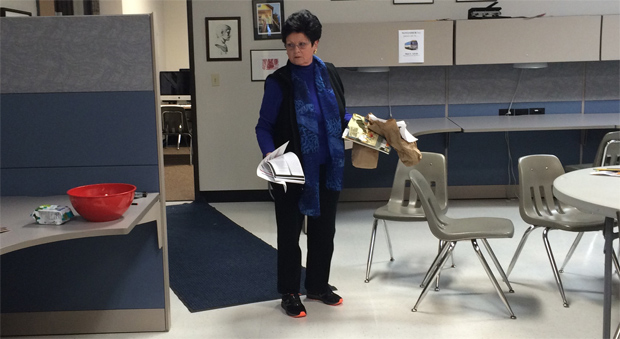 Many students at Northwest Academy are consistently failing to clean-up the Main Building after lunch, forcing the administration to create a policy to enforce the issue.
According to Erin Blenkiron, High School Activities Director and math teacher, any clothing or student materials left in the Main Building unattended would be confiscated.
The administration believes that the policy, which states that confiscated items can only be reclaimed by donating 50 cents to the Prom Fund, is strict, but necessary.
“Sometimes I walk through there and it’s just a mess after lunch,” David Wagstaff, Dean of Students, said. “Usually, by this time of the year, the seniors have gotten all the different classes in line. This year, sadly enough, it’s still a wreck after lunch.”
According to Wendy Bell, Receptionist and Office Manager, she ends up cleaning up after students, left to pick up the mess of food scraps and packages left strewn across the floor.
“The fact that [Wendy’s] in there and stressed out about it, and often times is the one picking stuff up… that’s not her job,” Blenkiron said.
Blenkiron hopes that the new confiscation policy will encourage students to be more conscientious of their clean-up duties, but plans to develop it more as the year goes on.
“I think that Wendy and I need to come up with a really clear system and make sure we are following through,” Blenkiron said. “It would be helpful if all of the staff worked to encourage [students to clean up].”
However, the administration is not the only group of people taking on the issue. Seniors Richy Swinford and Madeline Ettinger have been vocal about the importance of students cleaning up after themselves in the past.
“Our great enviroment is not something that every high school student has,” Ettinger said. “So it’s very important for us to take care of our environment.”
Swinford has taken on the role of “lunch sheriff” and makes sure students are cleaning up after themselves every day.
“It’s become my job [to enforce] a general cleanliness and respect for the school,” he said.
Blenkiron sees the seniors as possible mentors for the rest of the students during lunch clean-up.
“The seniors are responsible for overseeing it,” Blenkiron said. “They should be making sure the job’s getting done and circulating maybe even a little bit more. They should certainly be the first people to be acting like models and doing the right thing.”
Wagstaff also shares a similar opinion.
“It is the job of the seniors to shape everybody up,” he said.
Ettinger, who has seen the school grow since she started attending the middle school program in 2009, says the problem has escalated as the number of students has increased.
“Because our admission has gone up so much over the past seven years, I think the more people just make the more messes,” she said.
The boost in the student population is mostly due to the large freshman class.
“I think [the freshmen] can definitely [contribute more] since our class is bigger this year,” Mayana Puzauskas, a freshman, said. “We definitely don’t contribute beneficially.”
If the problem continues to worsen as the year goes on, Wagstaff believes harsher measures should be implemented.
“Down the road, [for example], what if I took every freshman’s off-campus pass for a week, and [said] ‘okay, as a class, you cannot leave the building at lunch,” Wagstaff said. “It’s draconian, it’s cruel… but temporary injustice is better than chaos.”
Swinford also sees a tougher policy in the future.
“This policy we’re thinking about putting in place is a lot more strict, so we’re even going to collect binders and schoolwork,” he said.
Ultimately, Blenkiron views the issue of lunch clean-up as something that all students should work to improve.
“There are some students who are very responsible and they could be helpful by rubbing off on some of the students who are not so responsible,” she said.
Related Posts


About The Author

Lukas Gordon
Lukas Gordon is a sophomore at Northwest Academy enjoying his first year in iJournalism. He is a writer and film critic, as well as a Junior Theater Reviewer at Artslandia Magazine. He enjoys filmmaking, as well as music, and is active at the School of Rock.