Behind the Makeup
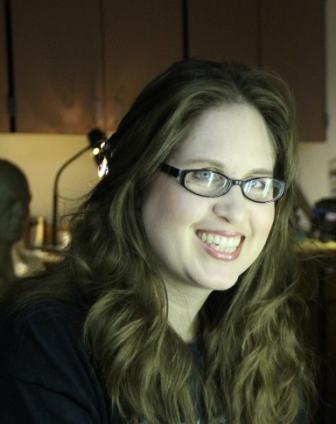 Covered in blood, both hands wrist deep in clay and plaster, Christina Kortum begins a day’s work on “Grimm,” creating the so-called Wesen. As one of the show’s primary special effects makeup artists, Kortum helps make the magical transformations from human to monster come to life.
The Portland-based make-up artist got started about 20 years ago when she went to a haunted house dressed as a vampire, doing such good work that the employees actually thought that she worked there.
“When I finally explained to security I didn’t work there (I was dressed as a vampire), they asked if I wanted to come back the next day,” she said. “After that I was hooked.”
She began using makeup as a way to hide herself and create new characters.
“I had horrible acne,” Kortum said. “The first time I acted in a haunted house and realized no one could see what I looked like under the makeup it was very inspiring to me.”
Since 2006, Kortum has worked on various sets such as “Grimm,” “Portlandia,” “Leverage,” “The Librarians,” “Wild” and “Gone,” utilizing her skills with make-up and prosthetics.
Being an FX (special effects) artist is challenging for professionals. For people just starting out it can be impossible. Wielding an airbrush and manipulating prosthetics requires an extremely skilled eye for color and details. One wrong move can ruin the effect of a character on film.
“It’s amazing: the transformation, and challenging,” Kortum said. “You have to get it right or it will show poorly on camera, which is exciting and scary at the same time.”
“Grimm” is known for its amazing special effects and creatures on camera. Being partly responsible for the transformation of characters like Monroe, a Blutbad (a wolf-based creature) has helped Kortum become part of the world of monsters.
For projects like “Grimm,” the most common FX techniques are airbrushing and prosthetics. Every design is thought out to add accuracy and detail to all the characters.
“First, artwork is drawn up by a professional illustrator,” Kortum said. “Then an actor or stunt actor has life castings made, and the special effects makeup company sculpts a clay version of the illustration. Molds are made, and then used to make prosthetics. The prosthetics are then applied to performer.”
Standing in front of a bin filled with food dye, Hershey’s chocolate syrup and pancake syrup to start the mixture for fake blood, Kortum describes the process of making the Murcielago, a fearsome bat-like creature. First comes the prosthetics, live cast molds are made of the actors face to ensure a good fit. The rest of the sculpture goes on top of the original plaster mask. For a creature like the Murcielago, hair and fur is needed to give it authenticity, each hair is punched in one at a time with a needle. For a full head of hair it takes about five hours, even with the artist moving quickly. “Flashing” comes next, taking off the excess material on the edges to clean up the sculpting. A second skin is added with wrinkles and other details, including pink around the eyes and nose to keep up the bat-like appearances.
“People, when they’re doing a monster tend to do black eyes and really dark black areas, and they do dark noses or black ears or whatever, they just bring a lot of darkness into it,” Barney Burman, another “Grimm” makeup artist, said. “We wanted to kind of steer away from that and make something that looked both cool and creepy but certainly had that warm, living essence coming out of that.”
After the ears are added, the silicon around the eyes is thinned to a paper-like consistency and glued down. Thin gloves with finger and claw extensions are added with bat webbing between the fingers. Finally, the artists work in tandem with airbrushes and extra makeup to add all of the necessary coloring and shades. Eventually the actor is transformed and ready for costumes.
“Grimm” normally has animal-based characters with more of a defined sense of what they are supposed to be, but when the scene calls for more of a ghostly there is more freedom in what the artists can create.
“When people already know what a character is supposed to look like you kind of need to follow the original design,” Burman, said. “But when it’s just a spook or a specter we can take more license to terrify people.”
The average special effect makeup for something like the Blutbad takes about two and a half to three hours. However, trying to create a full-bodied waterproof spirit like the La Llorona (a Latin-based ghost) can easily be a four to five hour job.
For the La Llorona, Kortum and the rest of the crew covered the actor in a fine layer of white silicon as a flexible base for the rest of the prosthetics and airbrushing. Not only does the makeup need to look good but also it needs to be functional. If an actor cannot move, speak or fight in the makeup, the design needs to be reworked. This is not a career for the impatient.
“There is a film-saying ‘hurry up and wait,’” Kortum said. “I spend much of my time waiting for my moment to help. Most people find it incredibly boring on set after an hour or two.”
Working with FX artistry in film is a lot different than doing it for live theater. On a set like “Grimm” there are digital designers and digital FX artists to help morph the characters and smooth out any mistakes. Part of the job of the digital designers is to create the character morphs Wesen are famous for. From human to creature, it is a joint effort for both the makeup and the digital crew. People take the amazing effects for granted without realizing all the work that goes into it. Each project is different and presents its own set of problems.
Not only can things go wrong with the makeup themselves but there can also be insane time constraints to work with. A project that most makeup artists would spend a couple weeks working on needs to be done in a few days. When the project is finally completed for a scene it all has to be done again the next time that certain monster is needed.
With film becoming more special effects-oriented, the need for digital and makeup artists is growing. You can’t get any old run of the mill makeup artist to create these terrifying creatures; FX artists work hard to study different techniques to give their work more authenticity. There is not any one way to become an FX artist, everyone learns in their own way but all of them share a common thrill at creating things people didn’t think were possible.
“Creativity, patience, problem solving skills, enthusiasm and a makeup kit,” Kortum said. “What every FX artist needs.”
From creating things out of nightmares to finding the best way to get out bloodstains (shaving cream), the life of an FX artist is anything but boring. While most credit goes to the actors the real magicians are the ones behind the makeup.
Related Posts


About The Author

Kylie Swinmurn
This is Kylie's first year taking a Journalism course. Along with writing she is an avid reader, dancer and horseback rider. Kylie hopes to continue writing for The Pigeon Press and improve her skills in the upcoming years.